69% off on product page · save $102.93
How to Identify a Porcelain Vase: Key Clues
Start by examining the vase in bright, indirect light. Porcelain usually has a smooth, glasslike surface, a fine-grained body, and a clear ringing sound when gently tapped. Because porcelain is a type of ceramic, identification depends on several clues rather than a single test.

Look at an unglazed area around the foot or base. Porcelain is generally white or creamy and may appear slightly translucent when a flashlight is held behind a thin section. Earthenware is often opaque and tan, red, or gray, while stoneware tends to be heavier and less translucent.
Check the listed dimensions for check the color and translucency against the available vehicle space before use.
Featured in this guide
Elegant European Porcelain Vase – Tabletop Home & Study Decoration
Turn the vase over carefully and photograph any painted, printed, incised, or impressed marks. Record symbols, numbers, country names, and unusual characters exactly as shown. A mark can help identify the factory and period, but reproductions may carry copied marks, so compare the clay body, decoration, and workmanship as well.
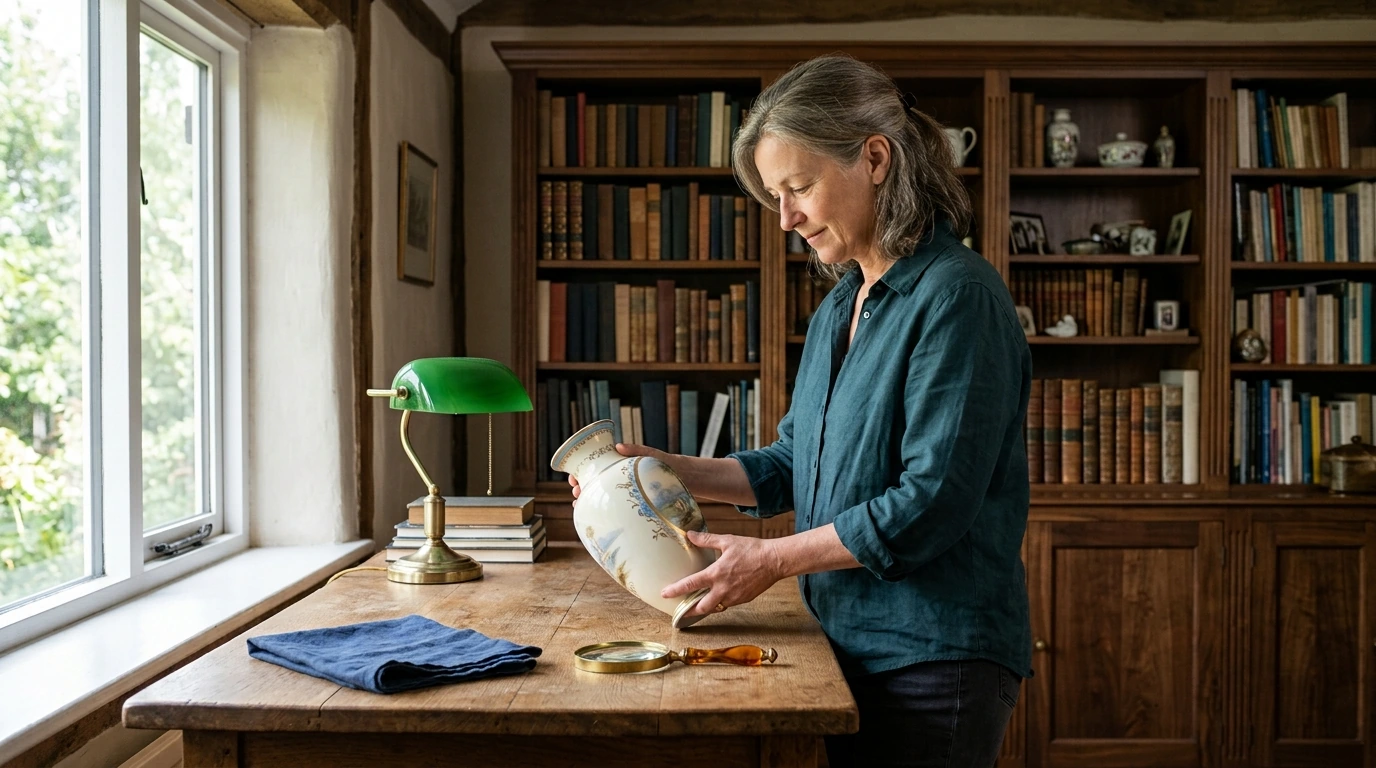
Use a magnifying glass to study painted details, gilding, glaze, and signs of wear. Authentic age may produce fine glaze crazing, gentle wear on raised gold, or grime in recesses, but artificial aging is common. Check for hairline cracks, chips, restoration, and drilled bases because condition can significantly affect value.
Take sharp photographs of the front, back, base, mark, rim, and damaged areas, then measure the vase’s height and widest point. Compare it with documented museum examples and completed auction sales rather than asking prices alone. For a more detailed process, see this guide on how to identify a porcelain vase.
Porcelain is ceramic, but it is typically whiter, finer, harder, and sometimes translucent. Check an unglazed edge and shine a flashlight through a thin area for additional clues.
Marks linked to rare imperial Chinese wares, Meissen, Sèvres, and certain established European factories can be valuable. However, the mark must match the vase’s age, materials, decoration, and provenance because famous marks are frequently copied.
Value depends on maker, age, rarity, artistry, size, condition, and documented ownership history. Compare completed auction results and obtain an appraisal for a vase that appears rare or exceptionally well made.
Visual-search and antique-identification apps can suggest similar pottery, but results are preliminary. Confirm any match through reference books, museum collections, auction archives, or a qualified specialist.
Photograph the vase from several angles, including close-ups of its base, mark, decoration, and wear. Use visual search to find comparable examples, then verify similarities in shape, material, technique, and dimensions.
A picture can narrow down a pottery style, region, or possible maker. Accurate identification usually requires clear images of the entire object and its base, plus measurements and details about weight and texture.




Leave a comment