20% off on product page · save $187.48
Do Hamsters Like Cluttered Cages? Finding the Right Balance
Hamsters generally enjoy a cage with plenty to explore, but there is a difference between enriching clutter and a crowded, hard-to-clean space. Hides, tunnels, bedding, and safe chew items give them places to investigate and retreat. Arrange these items so your hamster can still move freely and reach its food, water, and wheel.
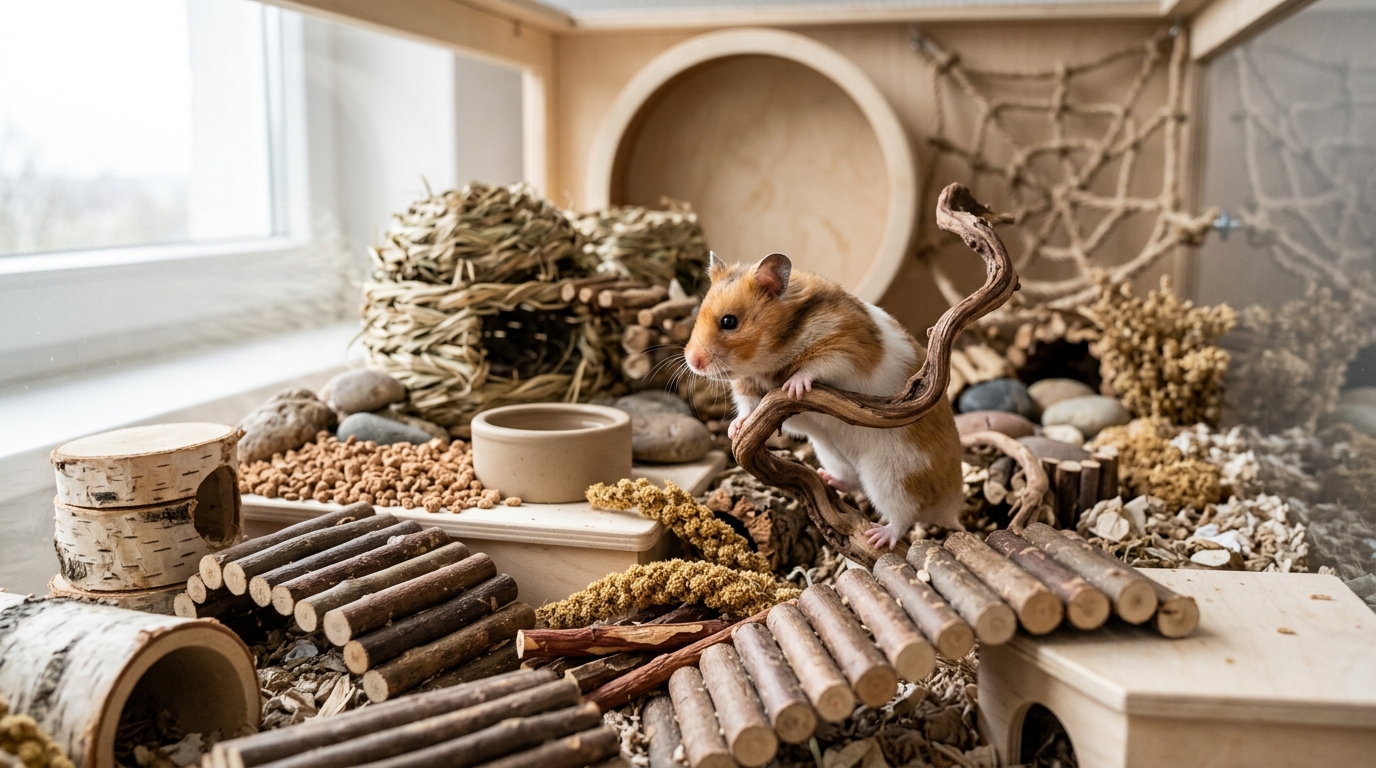
Hamsters are prey animals, so open space can leave them feeling exposed. Place a hide near a tunnel or a patch of deeper bedding to create sheltered routes across the enclosure. Check that entrances are wide enough for your hamster to pass through comfortably, including when its cheek pouches are full.
Featured in this guide
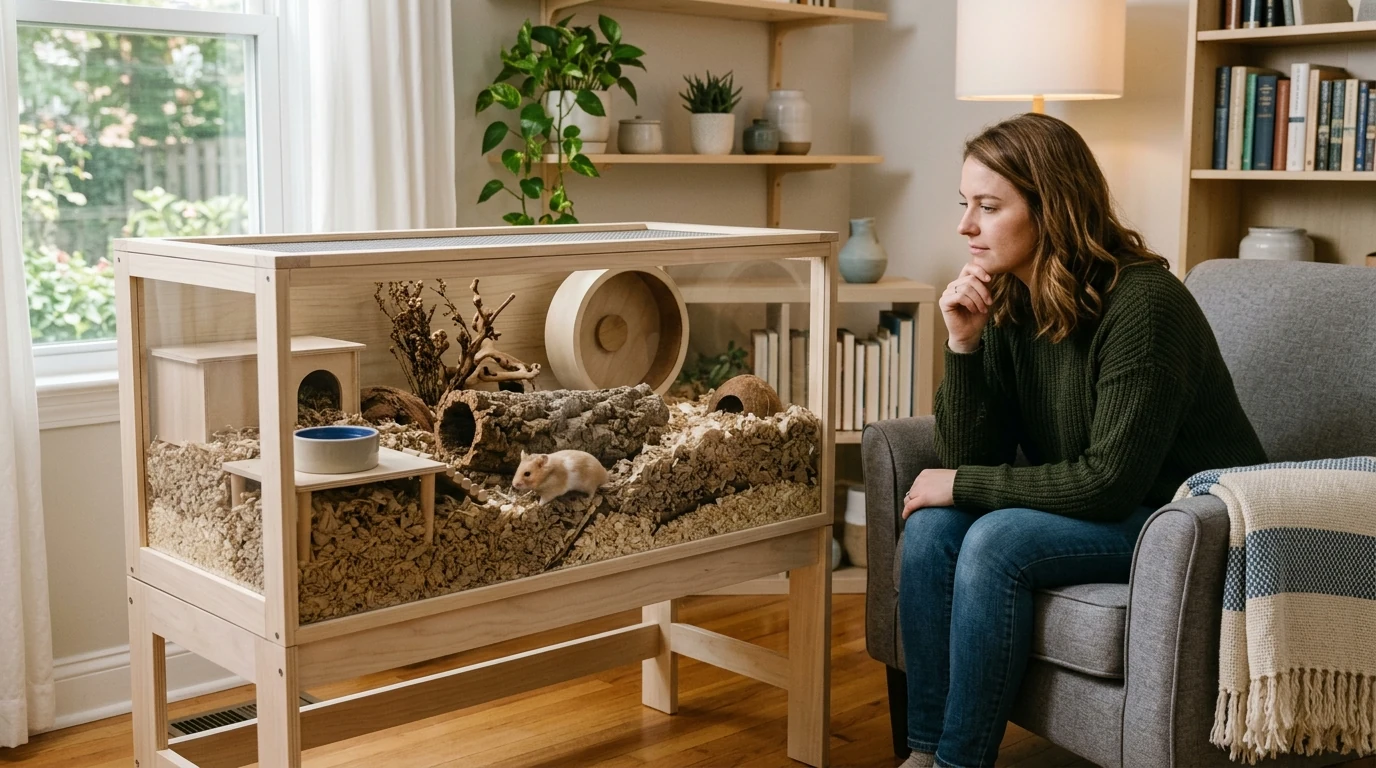
Deluxe Wooden Hamster & Small Pet Cage with Multi-Level Play Space
A thick layer of suitable bedding is often more useful than a collection of decorative accessories. It lets a hamster dig and build burrows, while a few lightweight items on top add variety. Set heavy hides on a stable base so digging underneath cannot cause them to tip or collapse.
Even a well-furnished cage needs clear access to the wheel, water, and food. Watch your hamster move through the layout after you make changes; if it must squeeze past objects or cannot use its wheel properly, remove or reposition something. Choose accessories that fit the enclosure rather than filling every available corner.
Moving one tunnel or adding a new chew can offer a little novelty, but a complete rearrangement may disrupt familiar routes and burrows. Keep some established hides and nesting areas in place during routine cleaning. For more enclosure-planning ideas, see the deluxe wooden hamster cage guide.
Hamsters can do well in an appropriately sized enclosure with deep bedding, a suitable wheel, hides, and opportunities to forage. Their behavior matters too: repeated escape attempts or bar chewing may signal that something needs to change.
Hamsters benefit from enclosures with ample uninterrupted floor space and enough depth for bedding. A secure lid, good ventilation, and room for a properly sized wheel are important features.
Loud noises, frequent handling, sudden layout changes, and too few hiding places can stress a hamster. Give it a quiet location and let it approach you at its own pace.
Hamsters do not show affection exactly like people do, but trust may look like calmly approaching your hand or taking a treat. A hamster that feels safe may also explore near you without immediately hiding.


Leave a comment