20% off on product page · save $187.48
Multi-Level Hamster Cages: Safe Setup Essentials
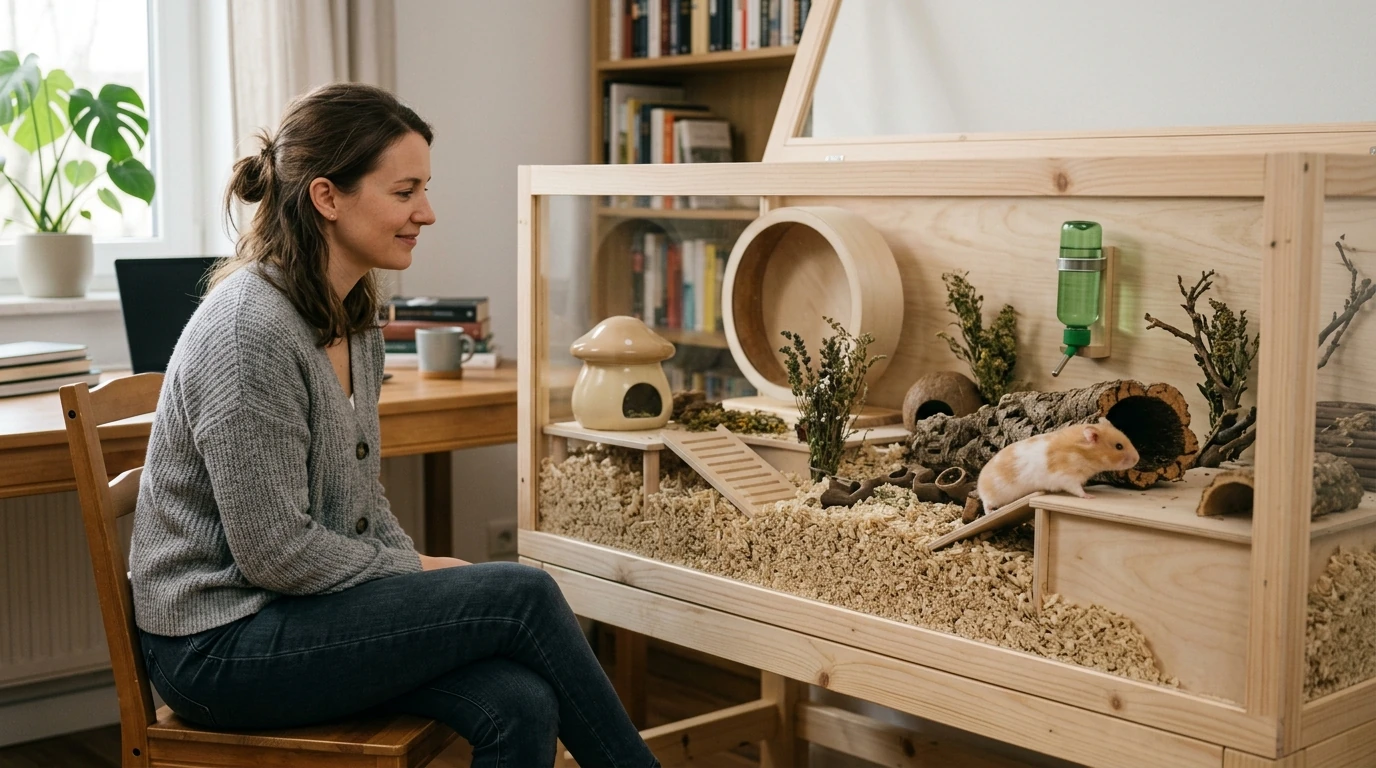
Multi-level cages can be good for hamsters when they provide ample uninterrupted floor space, safe access between levels, and enough depth for burrowing. Levels should supplement a spacious base rather than compensate for a small footprint.
Choose a habitat with secure platforms and gentle ramps, especially for Syrian hamsters, which can be less agile than dwarf species. Review the full guide to multi-level hamster cages before selecting a setup.

Hamsters naturally travel long distances at ground level, so horizontal room is more valuable than tall stacks of narrow platforms. Look for at least 600 square inches of continuous floor space, while recognizing that larger enclosures generally allow more natural movement.
Measure the interior base rather than relying on exterior packaging dimensions. Do not count shelves, tubes, or upper platforms toward the primary floor-space total.
Featured in this guide
Deluxe Wooden Hamster & Small Pet Cage with Multi-Level Play Space
Tall, open drops can cause fractures or internal injuries because hamsters have limited depth perception. Position solid platforms so there are no exposed falls greater than about 6 inches, and place deep bedding beneath elevated areas.
Use enclosed or gently sloped ramps with textured surfaces for traction. Avoid wire ladders and mesh floors, which can catch small feet or contribute to painful foot injuries.
A suitable base should hold at least 8 to 10 inches of compacted, paper-based bedding; larger species often benefit from 10 inches or more. Deep substrate lets a hamster build stable tunnels, regulate temperature, and retreat from light.
Check that doors and ventilation openings remain above the bedding line. If the original tray is shallow, use a compatible acrylic bedding barrier or choose a deep-sided enclosure.
Bar spacing must match the hamster’s size: approximately 1/4 inch is appropriate for dwarf hamsters, while no more than 1/2 inch is commonly used for Syrians. Test every door, tube connection, and corner for escape gaps before use.
Install a solid-surface wheel measuring about 8 inches for most dwarfs or 10 to 12 inches for Syrians. The hamster should run with a level back rather than arching upward.
Good airflow helps limit ammonia buildup, but the enclosure should not sit in direct sunlight or a cold draft. Add a sand bath, chew-safe accessories, tunnels, and at least one opaque hide on the main level.
Spot-clean damp bedding every few days and preserve clean nesting material to reduce stress. Inspect ramps, platforms, and fasteners weekly for chewing damage or loose fittings.
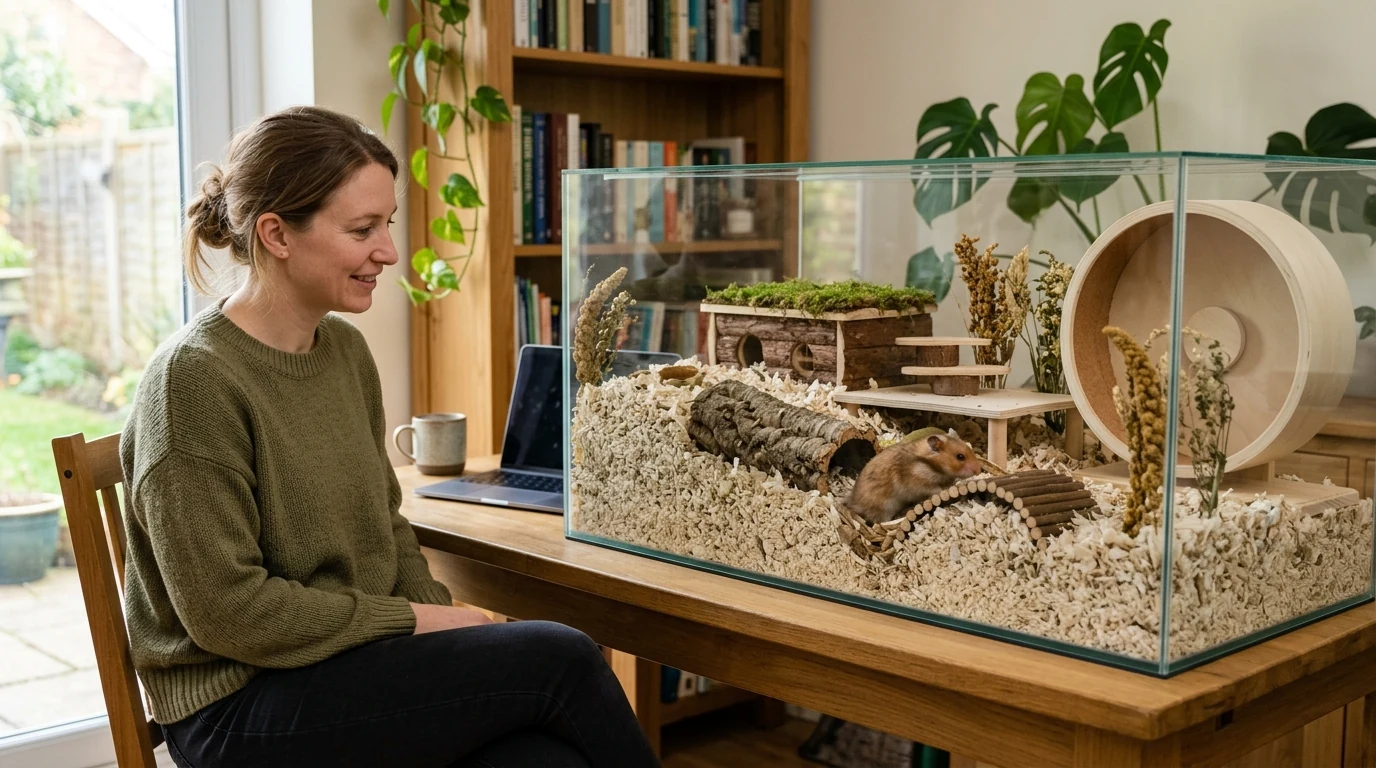
A good hamster cage has generous continuous floor space, deep bedding capacity, secure ventilation, and escape-proof openings. The hamster cage should also fit a correctly sized wheel, hides, a sand bath, and enrichment without crowding the animal.
There is no single confirmed leading cause of death for all hamsters; age-related disease, tumors, infections, and organ failure are common. Wet tail is a particularly dangerous cause of death in young Syrian hamsters, so diarrhea, lethargy, poor appetite, or a soiled rear requires urgent veterinary care.



Leave a comment