20% off on product page · save $187.48
Are Wooden Cages Good for Hamsters? Safety Guide
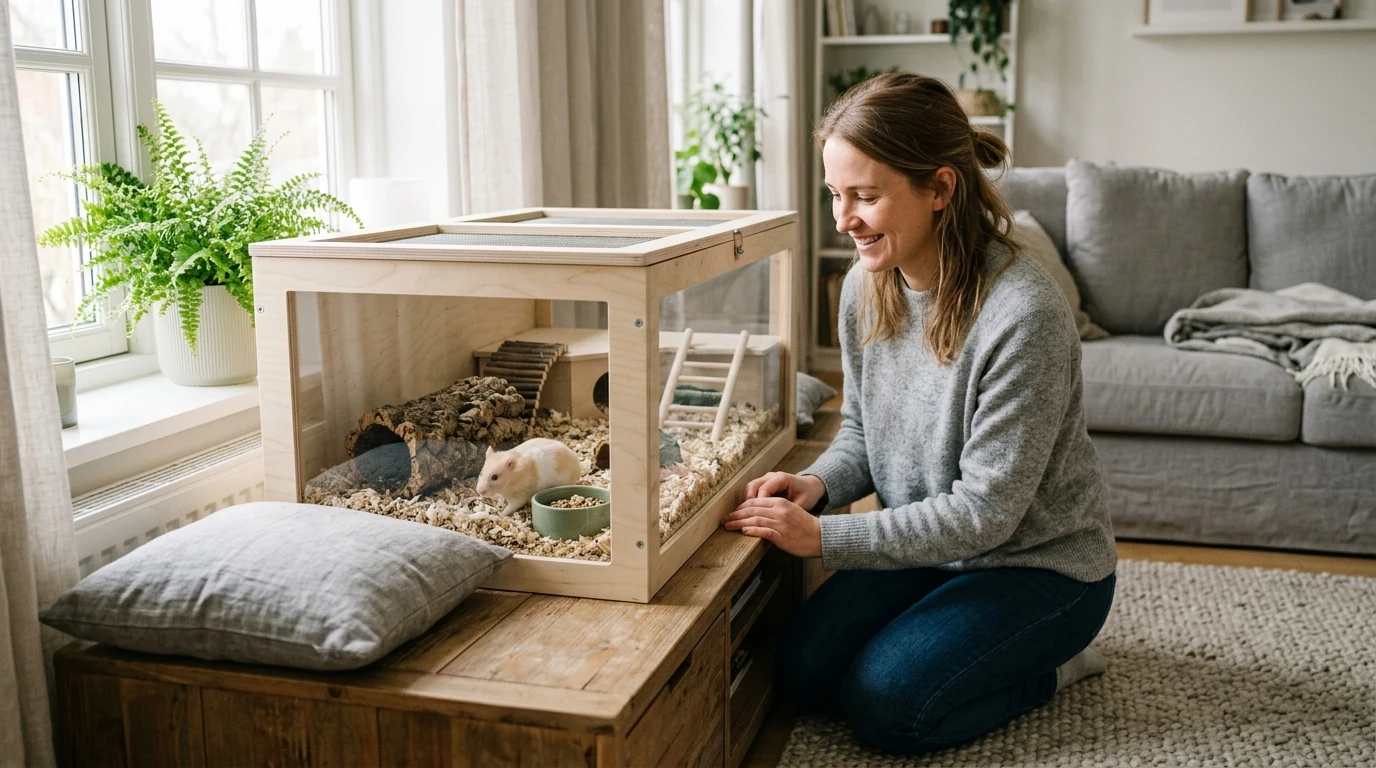
Wooden cages can provide hamsters with a quiet, attractive home, but only when they are designed specifically for small animals. Safe models need untreated, pet-safe wood, ample ventilation, secure construction, and enough uninterrupted floor space for natural burrowing and exploration.

Wooden enclosures retain warmth well and can reduce the noise created by digging, running, and moving accessories. Choose a cage with a deep base that can hold at least 8 to 10 inches of bedding, allowing the hamster to create stable tunnels.
Featured in this guide
Deluxe Wooden Hamster & Small Pet Cage with Multi-Level Play Space
Hamster urine can soak into unfinished wood, causing odors, stains, and bacterial growth that are difficult to remove. Protect vulnerable interior surfaces with a pet-safe sealant and check all corners weekly for dampness, splinters, swelling, or chew damage.
A wooden cage should include large mesh panels or multiple ventilation openings rather than relying on a few small holes. Confirm that the mesh spacing is no wider than about 1/2 inch for Syrian hamsters and 1/4 inch for dwarf hamsters to reduce escape risks.
Avoid cages made from cedar, heavily scented softwoods, pressure-treated lumber, or materials coated with unidentified paint or varnish. Look for smooth edges, non-toxic finishes, a secure lid, and at least 775 square inches of continuous floor space whenever possible.
Spot-clean soiled bedding every few days instead of repeatedly stripping the entire enclosure, which can stress a hamster by removing familiar scents. Use a removable waterproof tray or fitted liner, wipe it with a pet-safe cleaner, and let every surface dry completely before replacing bedding.
For a fuller comparison of benefits, drawbacks, and setup considerations, read the complete guide to wooden hamster cages.
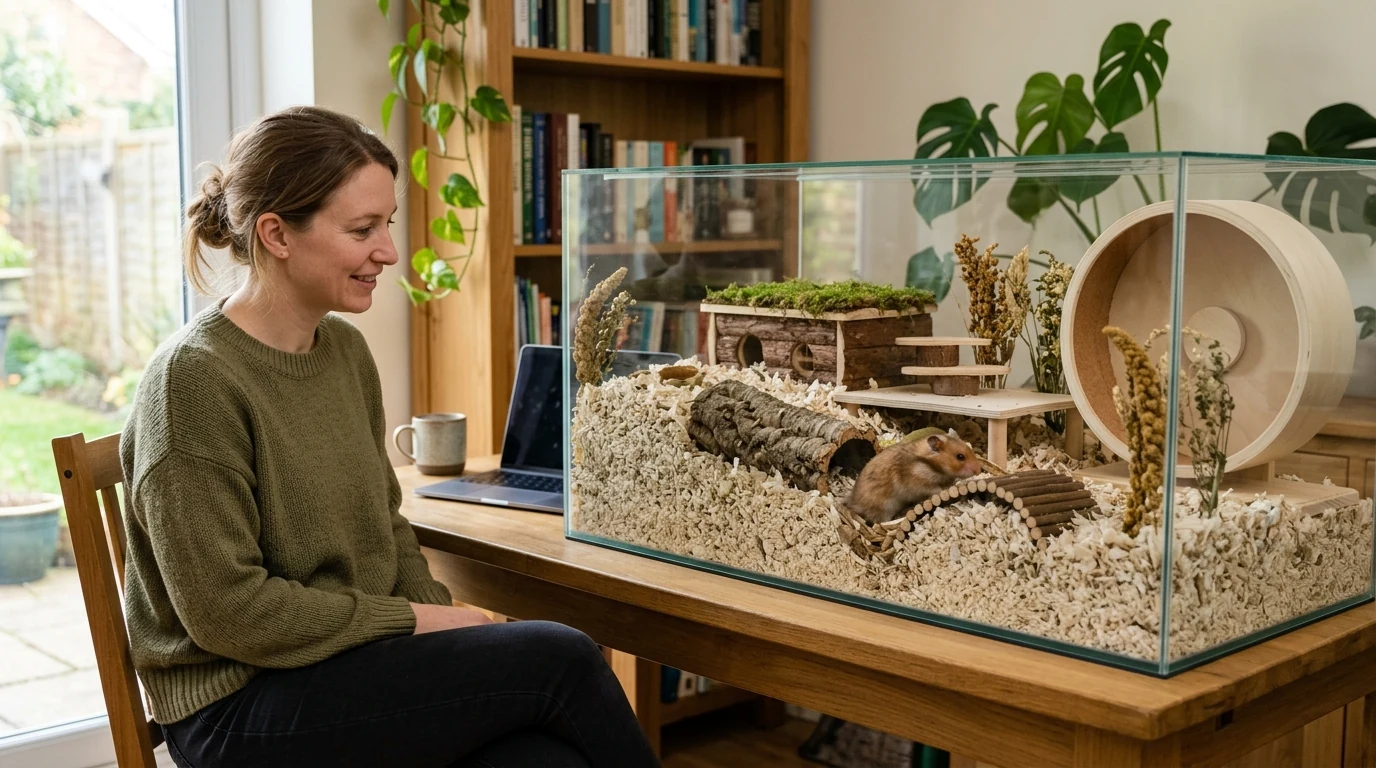
The best type of cage for a hamster is a spacious, secure enclosure with excellent ventilation and a deep bedding area. A large tank-style habitat, properly ventilated wooden enclosure, or suitable wire cage can work if it provides continuous floor space and prevents escapes.
The best material for a hamster cage is durable, non-toxic, moisture-resistant, and easy to clean. Glass and sturdy plastic resist urine absorption, while sealed pet-safe wood can also work when it is regularly inspected for chewing and water damage.


Leave a comment